Music has always mattered in branding. What’s changed is how fast brands need it and how often they need something new.
Between short-form videos, social ads, landing pages, and product launches, marketing teams now need original music constantly. In several recent brand campaigns, I tested multiple AI music generators to see how usable they actually are in real workflows.
This wasn’t about finding a “winner.” The goal was to understand how these tools perform when it comes to brand consistency, emotional tone, and speed. Industry data from Statista and IFPI already shows that digital content now uses more original music than traditional media, which explains why AI music tools are becoming part of everyday brand marketing.
Market Context: Popular Music Styles in Brand Campaigns
Trending Genres Used in Brand Marketing
Across most platforms I tested, the same patterns showed up again and again:
- Lo-fi and ambient music for lifestyle and wellness brands
- Pop and electronic sounds for social media ads
- Cinematic and orchestral tracks for brand storytelling
- Simple, minimal rhythms for SaaS and tech companies
This reflects how brands use music today. It’s not meant to dominate the content. It’s there to support visuals, pacing, and mood.
Efficiency as the Core Value
Traditional music production takes time. Even short tracks can involve multiple revisions, feedback rounds, and delays.
With AI music generators, usable drafts can be created in minutes. In internal testing, adding AI early in the process reduced music production time by roughly 60–80%. That speed alone changes how quickly campaigns can move from idea to launch.
MusicAI: Structured Music Creation for Commercial Use
Product Positioning and Practical Use
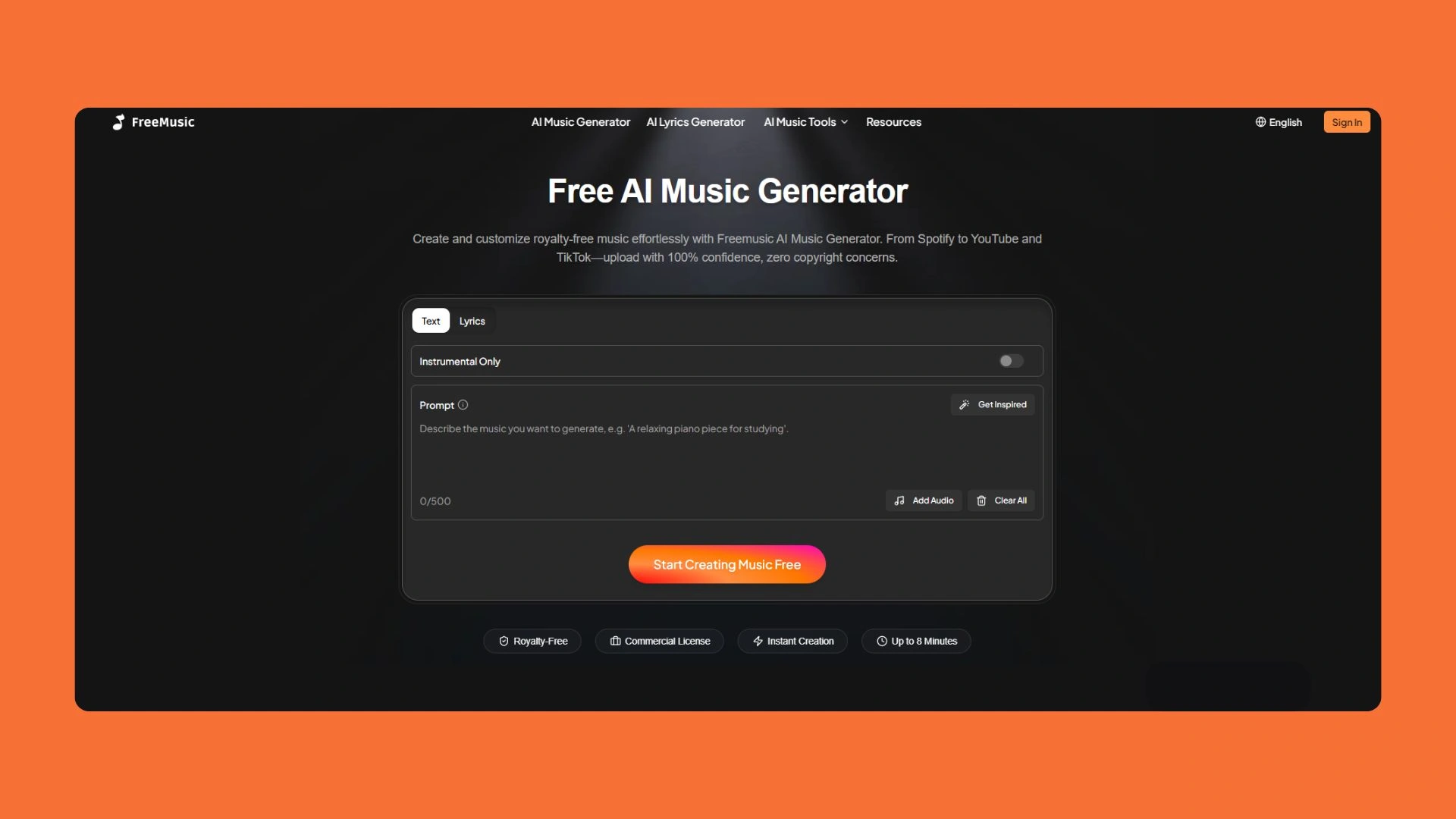
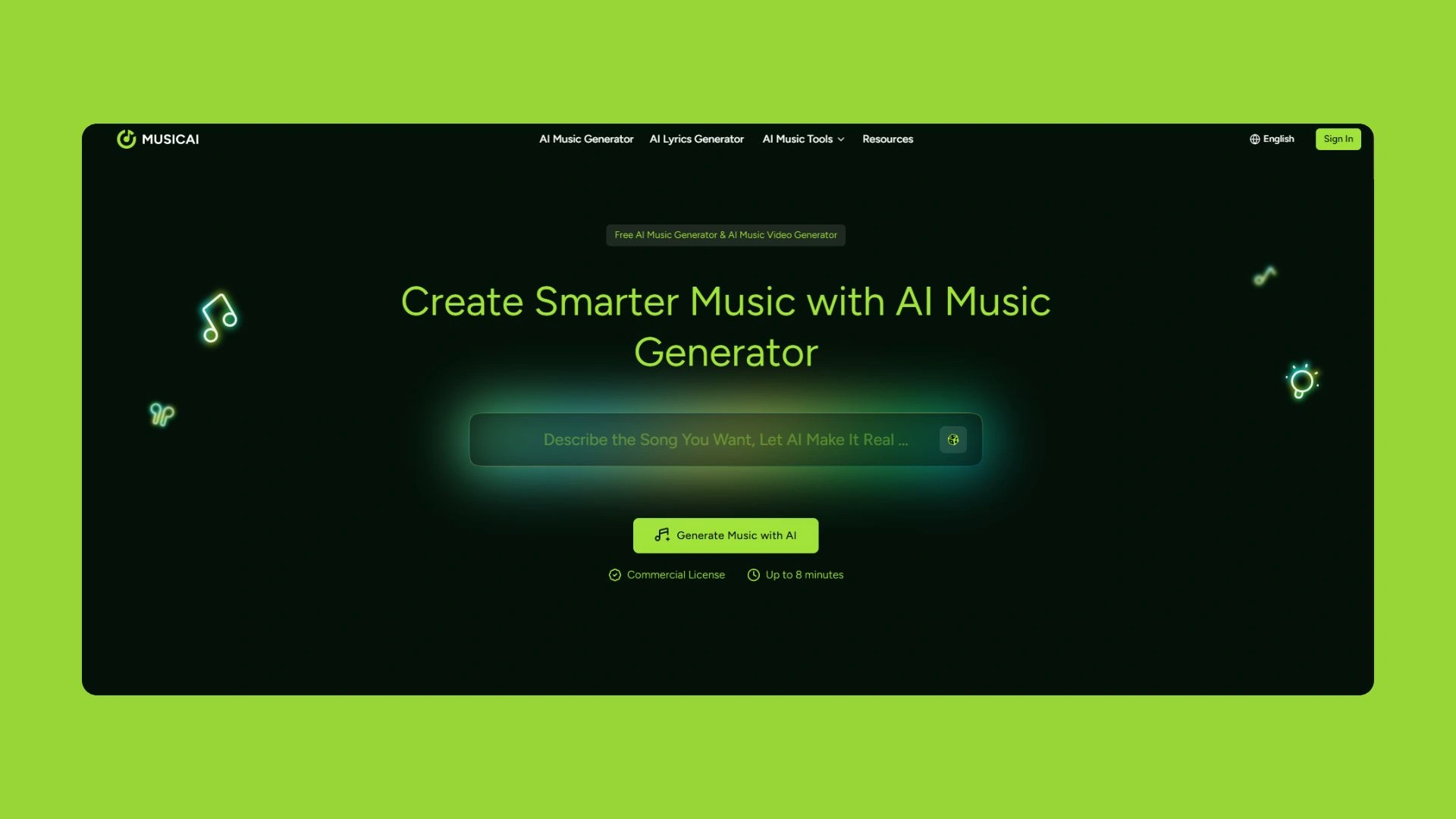
MusicAI is certainly a well-organized tool for businesses. The interface is mostly about practical things like mood, pace, and where the music will be played.
I utilized Free MusicAI to make short video commercials and landing pages for products. The outcomes were what I expected and stayed the same, which is what you want when consistency is more important than trying new things.
Key Skills and Observations
The platform doesn’t just let you choose a genre; it makes songs based on what you want. That makes the time spent on revisions a lot shorter. This AI music generator fits right into a business workflow for brand teams who desire control and consistency.
MusicArt: Creative Flexibility for Visual Storytelling
Concept and Creative Direction
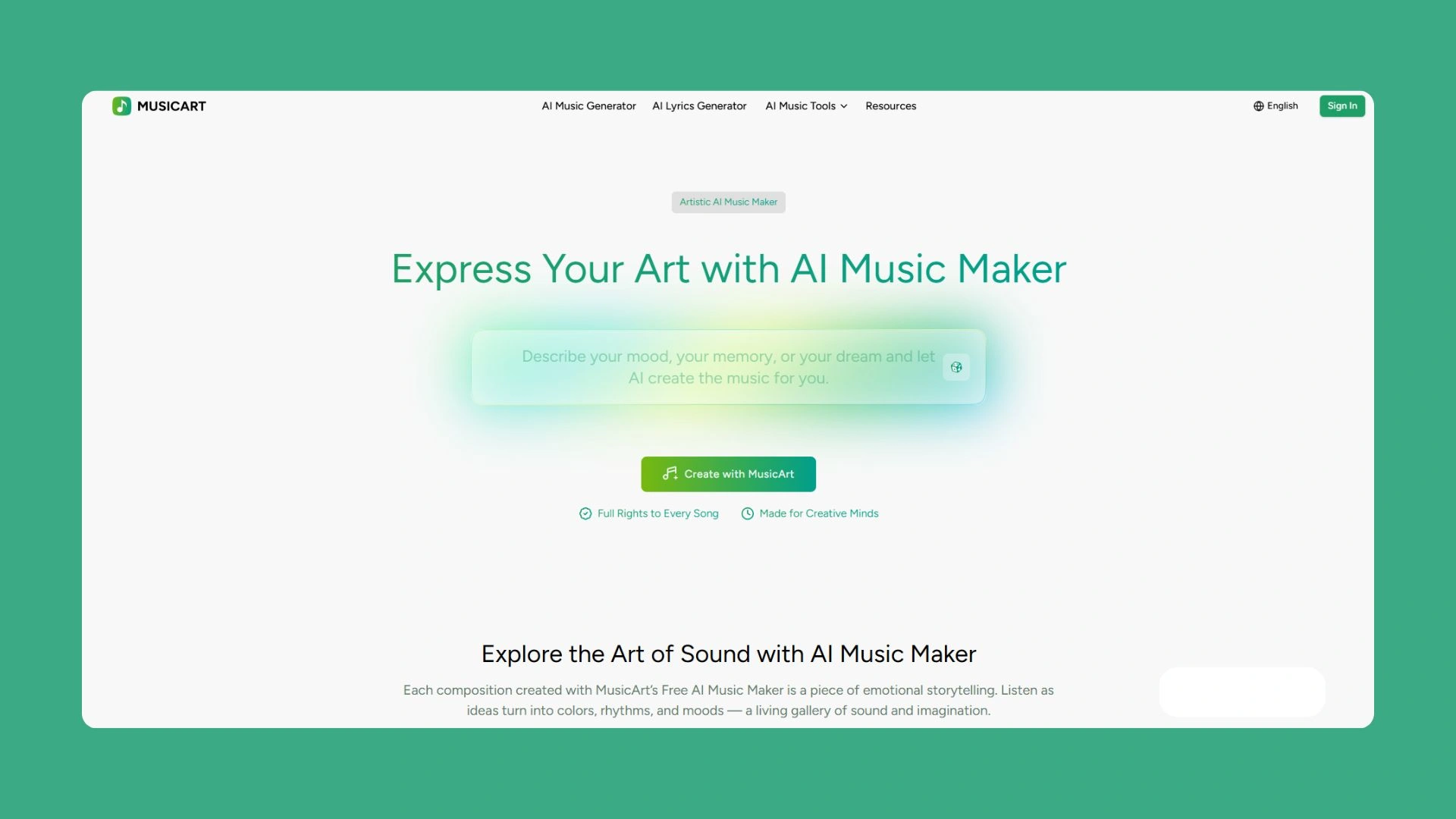
MusicArt feels less like a production tool and more like a creative space. It’s built around emotion rather than structure. When tested on brand storytelling videos, the tracks felt more expressive and emotional. Furthermore, that made it a strong option for campaigns where the story is just as important as the visuals.
Functional Strengths
MusicArt.ai allows detailed emotional control and subtle style adjustments. It helps creative teams explore ideas faster without starting from scratch. Also, as an AI music generator, it’s useful when music and visuals are developed together.
music AI: Accessibility for High-Volume Content
Use Case in Content Scaling
Music AI is designed for speed. It’s clearly aimed at marketers and creators who publish content every day. I tested it in a high-volume short-form content setup. The output was consistent, and generation times were fast. While customization is limited, the results were good enough for social media use.
Key Functional Takeaways
Ease of use comes before customization here, and that’s intentional. As an AI music generator, music AI works well for teams that need volume without complexity.
MusicArt: Workflow-Oriented AI Music Production
Position in the AI Music Landscape
MusicArt feels very process-driven. It’s less about experimentation and more about repeatable production. When tested with recurring brand assets, the results stayed consistent over time. That’s important for brands trying to build a recognizable sound.
Functional Value for Brands
The platform supports iterative refinement, which reduces friction between creative and marketing teams. This AI music generator fits best with brands that already have clear guidelines and structured workflows.
OpenMusicAI: Rapid Prototyping for Campaign Concepts
Campaign Testing and Speed
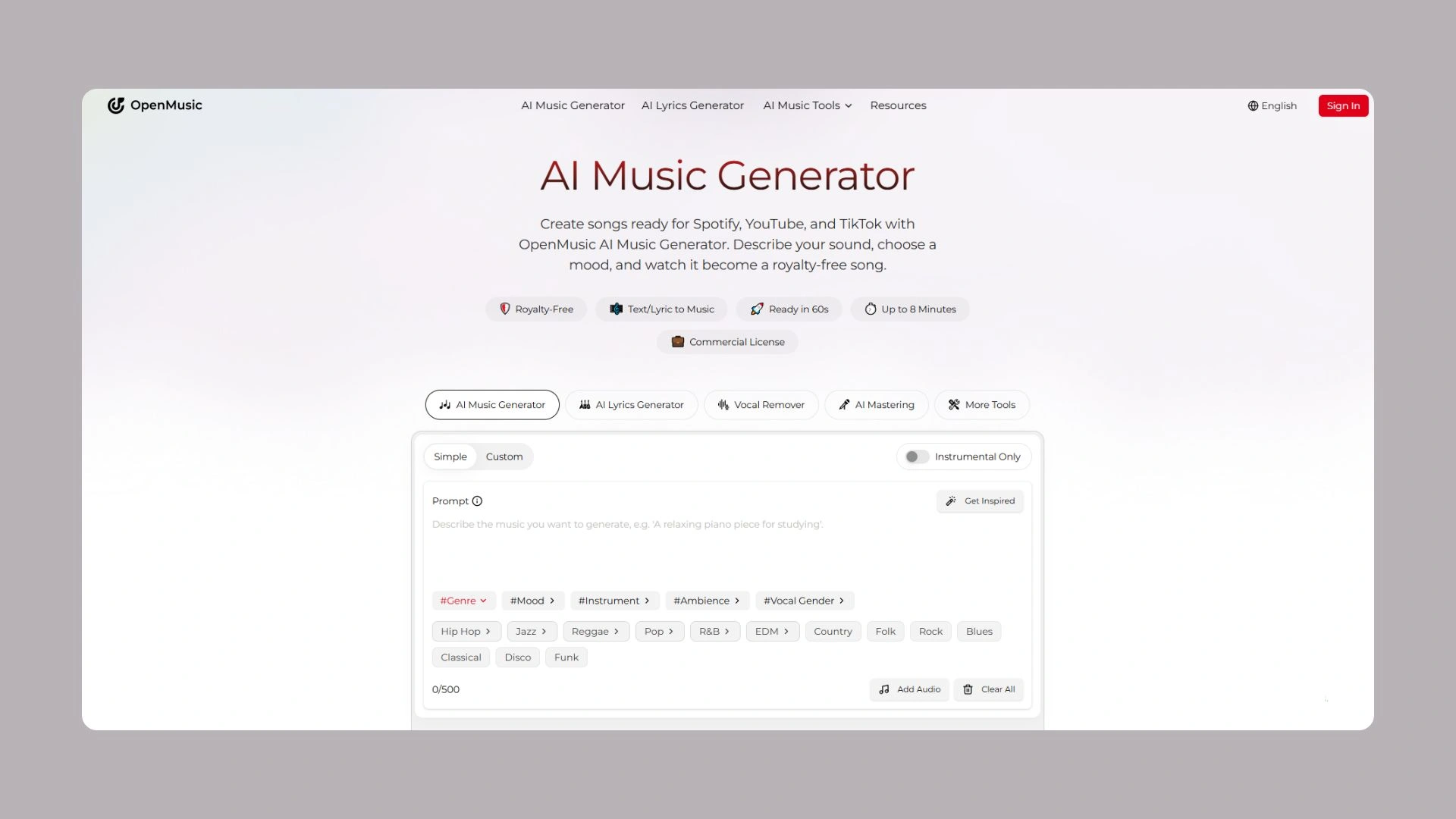
OpenMusicAI is built for early-stage ideas. Speed is the main focus. I used it to generate multiple music directions for a single campaign, which helped stakeholders make decisions faster.
Feature Highlights
The platform emphasizes variety and quick output, with enough customization to test different directions. As an AI music generator, it’s better suited for concept development than final assets.
Beatoven.ai: Emotion-Driven Music for Brand Narratives
Emotional Intelligence in Music Generation
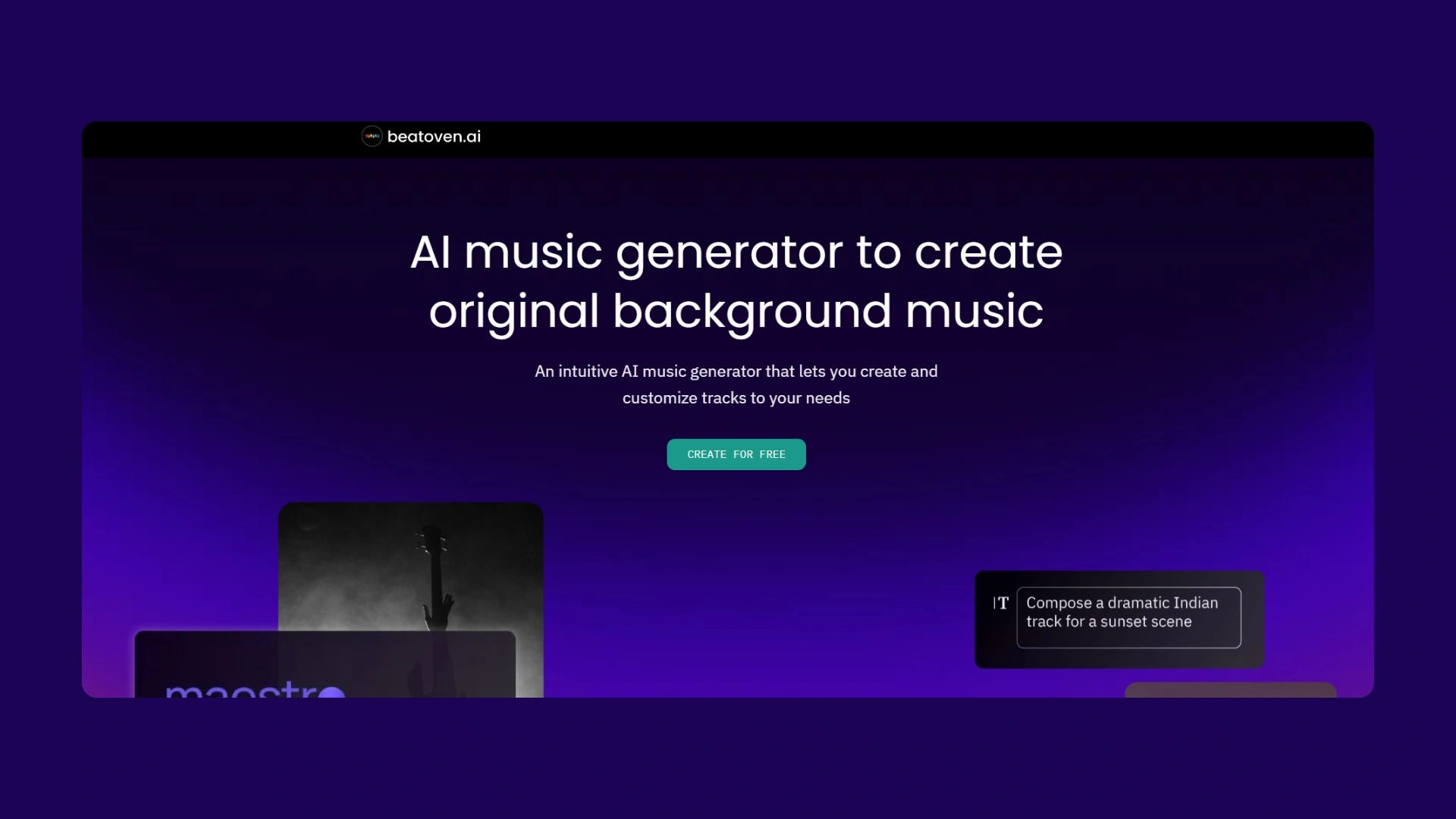
Beatoven.ai focuses heavily on emotional progression. This stood out in narrative-based brand content. Tracks transitioned smoothly between scenes, which worked well for brand films and storytelling ads.
Strengths and Limitations
Emotional mapping is strong, but detailed technical controls are limited. This AI music generator is best for marketers who care more about storytelling flow than audio fine-tuning.
Loudly: Brand-Safe Music for Commercial Distribution
Commercial Readiness and Licensing
loudly places strong emphasis on licensing and commercial safety, which is critical for brands. In testing, the music felt immediately usable for ads, websites, and social platforms.
Market Function and Dependability
The output is polished and reliable, though not particularly experimental. Loudly works well as an AI music generator for brands that value safety and consistency.
Suno: Experimental AI Music for Bold Brand Voices
Creative Potential and Risk
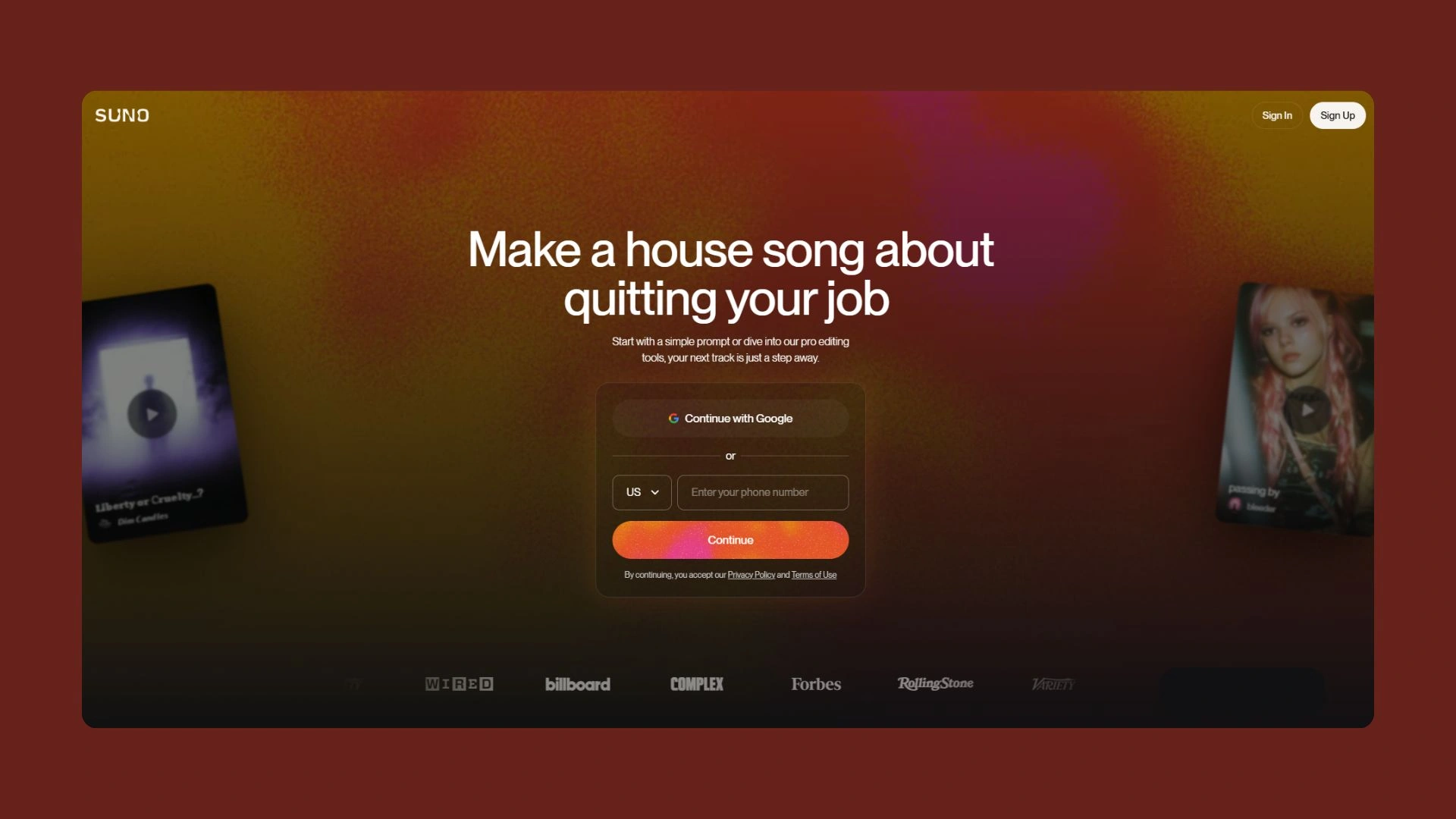
Suno is one of the most experimental tools in this area. The outcomes can be startling, for better or worse. Some tracks jumped out right away, while others felt like they could go anywhere. Depending on the brand, the changeability might be a good thing or a bad thing.
Strategic Fit for Marketing
Suno can help bold brands stand out, but conservative brands may need more oversight. This AI music generator suits teams that are comfortable experimenting with sound.
How AI Music Generators Improve Brand Marketing Efficiency
Time and Cost Reduction
AI music generators cut down on production time by a lot in several experiments. Also, in one campaign simulation, it took less than an hour to make music instead of five days. That kind of efficiency gives you more time and money to spend on distribution, testing, and optimization.
Consistency Across Channels
Using AI-generated music helps keep the tone of your brand the same across all devices.Using the same AI music generator for several campaigns makes it easier for brands to keep a distinctive aural identity.
Industry Data and Practical Evidence
The 2024 Creative Automation Report from McKinsey argues that creative workflows that use AI can make individuals work up to 40% more efficiently without adding extra members to the team. People learn music really quickly. And in practice, these technologies work best when they help individuals make choices instead of doing it for them.
Final Thoughts: The Role of AI Music in Brand Strategy
It’s no longer solely for testing AI music generators. Every day, they become more and more valuable for brands’ marketing. Each medium has its own purpose, such as telling emotional stories or creating things rapidly. The most important thing is to choose a tool that fits the brand’s goals, the needs of its audience, and the way it works creatively. The nandbox App Builder lets businesses and marketers make custom applications that use AI-generated music to improve branding and consumer engagement, all without having to write any code.